
Cash vs. Mortgage: A Practical Guide for Homebuyers
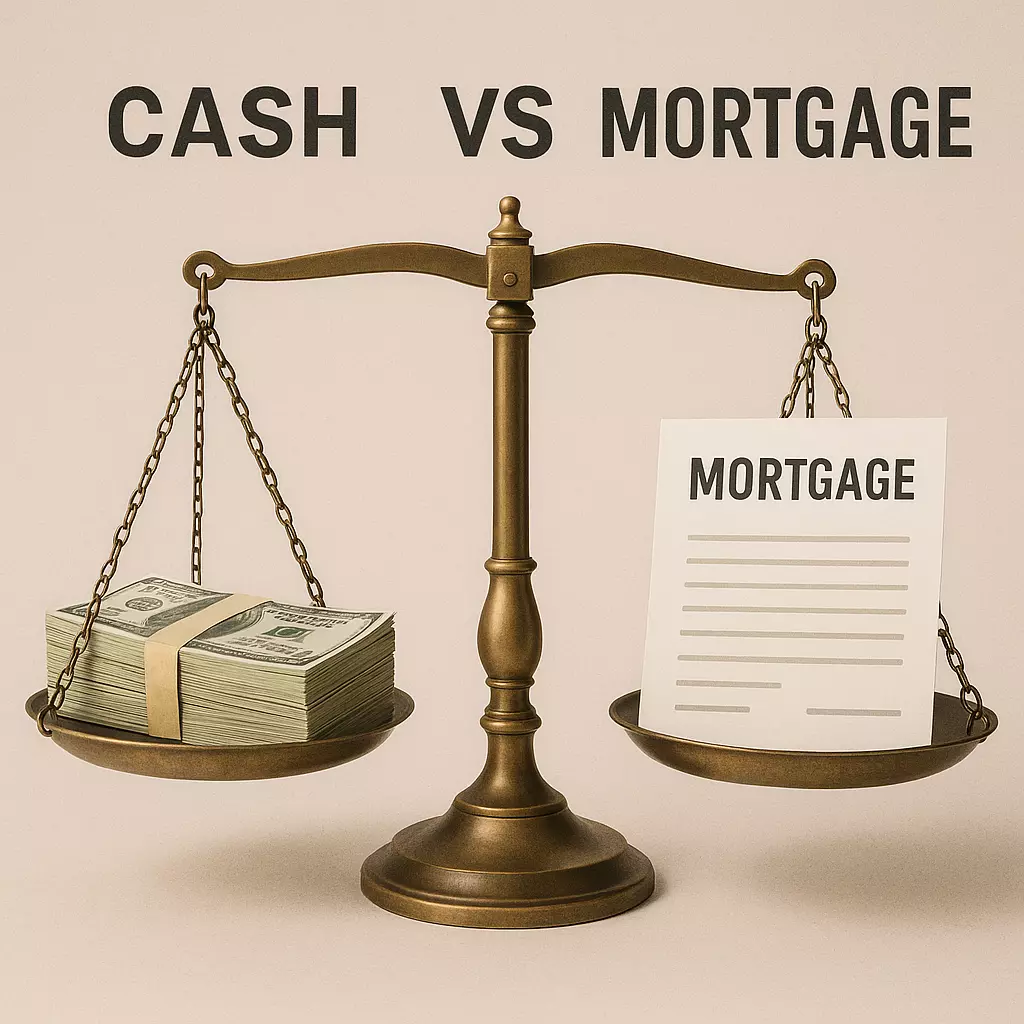
🧮 Cash vs. Mortgage: A Practical Guide for Homebuyers
When you’re buying a home, how you pay for it is just as important as what you buy. Do you pay 💵 all cash and own it outright? Or do you take out a 🏦 mortgage and keep more money in the bank?
Both options can be smart moves—it just depends on your finances, your goals, and how much risk you’re comfortable with. In this guide, I’ll break down the pros and cons of each approach and walk you through how to decide what’s best for you.
Why This Decision Matters
💰 The Financial Impact
How you finance your home affects:
-
Your cash on hand (liquidity)
-
Your ability to invest in other opportunities
-
Your overall financial flexibility
For example:
-
A buyer who pays all cash might love being mortgage-free, but if most of their savings are in the house, they may be tight on cash if an emergency or opportunity pops up.
-
A buyer who uses a mortgage keeps more money accessible, but takes on a long-term monthly payment.
This isn’t just about “Can I afford it?”—it’s about “What does this choice do to the rest of my financial life?”
🧘 The Emotional Side
Money decisions aren’t purely logical.
-
Some people sleep better at night knowing they own their home outright and have no debt.
-
Others are totally comfortable with a mortgage if it means they can stay flexible and growing.
There’s no one “right” answer—just the right answer for you.
Paying in Cash: Pros and Cons
✅ Pros of Paying in Cash
No Monthly Mortgage Payments
-
Once you’ve paid, that’s it—no mortgage hanging over your head.
-
Frees up your monthly cash flow for travel, investing, renovations, or breathing room.
Stronger Offer in Negotiations
-
Sellers love cash because there’s less that can go wrong.
-
No financing condition, fewer delays, and usually a smoother closing.
-
In a competitive situation, a clean cash offer can often beat a higher financed offer.
No Interest Costs
-
You avoid paying thousands (or hundreds of thousands) in interest over the life of a mortgage.
Faster Closing
-
Without a lender involved, the process can be quicker and simpler—sometimes 7–10 days.
❌ Cons of Paying in Cash
Liquidity Risk (Being “House Rich, Cash Poor”)
-
Draining your savings for a home can leave you unprepared for emergencies or opportunities.
Opportunity Cost
-
Every dollar you put into the home is a dollar you can’t invest elsewhere.
-
If you could earn more in investments than you’d pay in mortgage interest, cash may not be the most efficient move.
No Leverage
-
Mortgage financing lets you control a high-value asset with relatively little capital.
-
Paying cash means giving up this advantage.
Using a Mortgage: Pros and Cons
✅ Pros of Using a Mortgage
Keep More Cash Available
-
Financing spreads the cost over time and lets you keep a stronger emergency fund.
-
You can also invest the money you don’t put into the house.
Leverage That Works in Your Favour
-
A small down payment gives you control of a valuable asset.
-
If the property appreciates, you benefit from the gain on the entire home—not just your down payment.
Potential Tax Benefits on Rentals
-
In Canada, mortgage interest for rental properties is generally tax-deductible.
-
(Always confirm with a tax professional.)
Build or Strengthen Credit
-
Consistent mortgage payments can help you build a strong credit history.
❌ Cons of Using a Mortgage
Interest Costs Add Up
-
You’ll pay more for the home long-term because of interest.
Mandatory Monthly Payments
-
Your mortgage takes a fixed portion of your budget every month.
-
If your income drops or expenses spike, that obligation can feel heavy.
Longer Closing Process
-
Appraisals, underwriting, and lender conditions can slow things down.
Key Factors to Consider
🎯 Your Financial Goals
-
Do you value being debt-free?
-
Or are you trying to maximize your net worth through investments and liquidity?
📈 Market Conditions
-
In a hot market, cash can give you an edge.
-
In a softer market, financing won’t hurt your negotiating position as much.
🧗 Your Risk Tolerance
-
How comfortable are you with debt?
-
Would tying up most of your cash stress you out?
🕰️ How Long You Plan to Stay
-
Staying at least 5–7 years helps offset closing costs and market fluctuations.
Actionable Steps to Help You Decide
-
Review Your Finances
-
Add up savings, income, expenses, and confirm your emergency fund stays intact.
-
-
Talk to a Mortgage Broker
-
Learn your options, rates, and what your monthly payments would look like.
-
-
Compare Scenarios
-
Look at the total cost of paying cash vs. financing (including interest).
-
-
Consider Your Bigger Plans
-
Do you want to invest, start a business, or build a real estate portfolio?
-
-
Get Professional Advice
-
Combine insight from a realtor, mortgage broker, and financial advisor.
-
Practical Tips for Making the Right Choice
-
Run the Numbers but also listen to your gut.
-
Protect Your Emergency Fund—no matter which option you choose.
-
Don’t Stretch just because a bank pre-approves you for a certain amount.
-
Match the Strategy to the Property (primary residence vs. investment).
Conclusion
Paying cash and taking out a mortgage can both be great choices—it all depends on your finances, goals, and comfort with risk.
If you’re someone who values stability and simplicity, paying more cash may appeal to you.
If you’re someone who values flexibility and long-term growth, a mortgage might be the better tool.
Either way, I’m here to help you build a plan that works for your life.
📞 Call or text me at (639) 295-4696
📧 tanner@twrealestate.ca
🌐 twrealestate.ca
Let’s walk through your options and find the smartest way to finance your next home.
Recent Posts
GET MORE INFORMATION